
The Intubation Readiness Indicator tracks the relationship between the first twitch and the control twitch (T1/Tc) during induction, enabling clinicians to assess neuromuscular block depth by monitoring the suppression of T1 amplitude. Unlike TOF fade, or a set time interval—which can vary widely between patients—T1 suppression is a more direct, consistent, and reliable parameter for identifying optimal intubating conditions. EMGINE™ Aurora presents this information through an intuitive visual suppression of the T1 amplitude bar, helping clinicians track progression toward adequate intubating conditions in real time. By providing clear visual guidance alongside quantitative data, the Intubation Readiness Indicator helps support informed airway management decisions during induction
The next evolution of TetraGraph® is here.
- Built on Senzime’s advanced electromyography-based algorithm, refined through more than six billion real-world data points, EMGINE™ Aurora extends TetraGraph beyond traditional TOF monitoring into a comprehensive perioperative insight platform.
- Following the success of EMGINE™ Sirius, EMGINE™ Aurora introduces a new generation of features designed to support clinical decision-making throughout the perioperative journey.
- From assessing intubation readiness and managing neuromuscular block to predicting recovery and confirming safe extubation, Aurora helps deliver the right insight at the right moment.
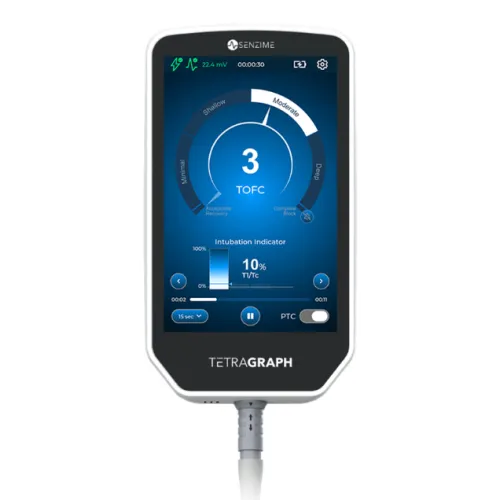
A Complete Neuromuscular Management Experience.
The proprietary Intubation Readiness Indicator helps clinicians assess onset of neuromuscular block before airway management.
Case Alerts can remind teams when to reassess and consider additional NMBA during the case.
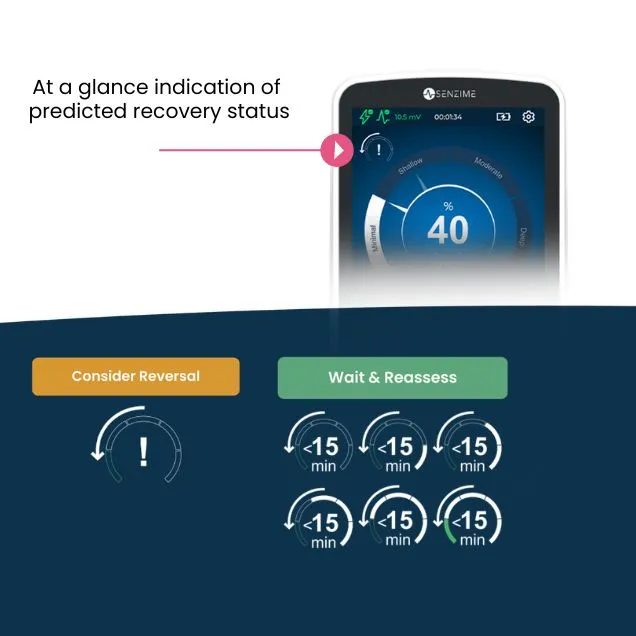
Predictive Recovery estimates the likelihood of reaching TOFR ≥ 0.90 spontaneously within the next 15 minutes.
Quantitative TOFR ≥ 90% confirmation and end-of-case summaries support a clear closeout of every patient case
Introducing the Latest Innovations
Intubation Readiness Indicator (T1/Tc)
A recent randomized, prospective clinical trial had the objective of comparing intubating conditions when tracheal intubation is guided by quantitative train-of four (TOF) monitoring versus a fixed time interval following rocuronium administration.
Guiding tracheal intubation using quantitative neuromuscular monitoring to confirm sufficient neuromuscular block resulted in significantly better intubating conditions compared with waiting a fixed time after rocuronium administration. These findings support extending the use of quantitative monitoring beyond recovery and into the induction phase of anesthesia.
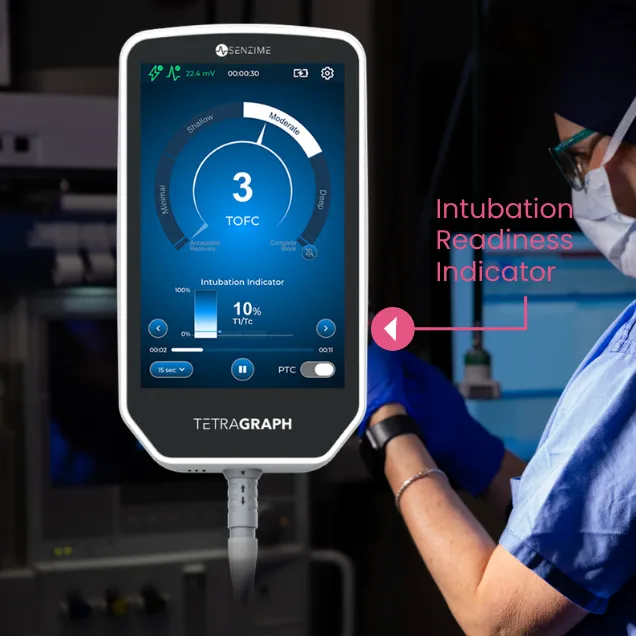
T1/TC considers the ratio of the amplitude of the first twitch (T1) following train-of-four (TOF) stimulation to the amplitude of the baseline control twitch (TC).
As each patient serves as his or her own control, T1/TC is independent of the arbitrary threshold that a specific device manufacturer selects for what their monitor considers a twitch. This measurement provides valuable insight during onset of neuromuscular block and can indicate when acceptable intubating conditions have been achieved.
Lower T1/TC values correlate with a higher likelihood of acceptable intubating conditions and most patients have acceptable intubating conditions once T1/TC is less than 0.2.

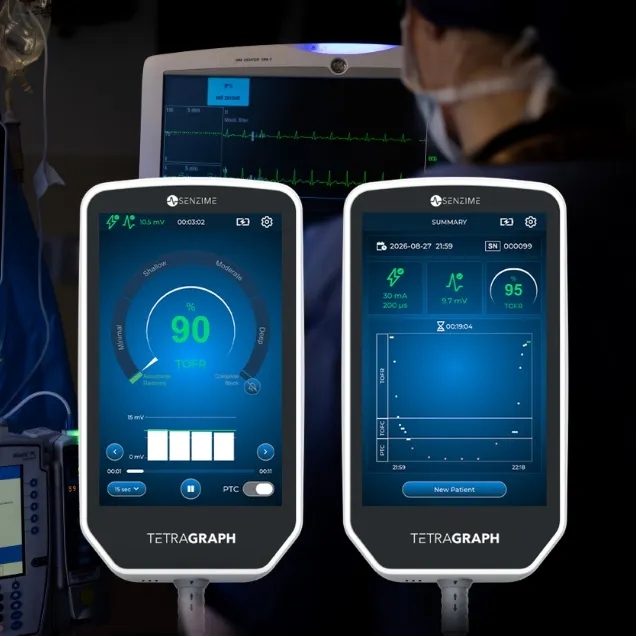
Designed to help clinicians predict when a patient is likely to recover to TOFR ≥0.90 without reversal within the next 15 minutes. Predictive Recovery provides forward-looking insight to support decision-making during emergence to help clinicians optimize reversal timing, avoid unnecessary intervention when recovery is imminent, and prepare for extubation with greater confidence. The recovery gauge provides a visual representation of the predicted recovery trajectory. As the gauge fills, the estimated time to spontaneous recovery decreases.
From passive measurement to proactive intraoperative guidance, supporting personalized dosing decisions and stable surgical conditions. The maintenance phase is where conditions change, teams get busy, and neuromuscular management must stay aligned with the surgical plan. Case Alerts provide case-specific audible and visual notifications that help clinicians reassess neuromuscular block status at key moments during the procedure.
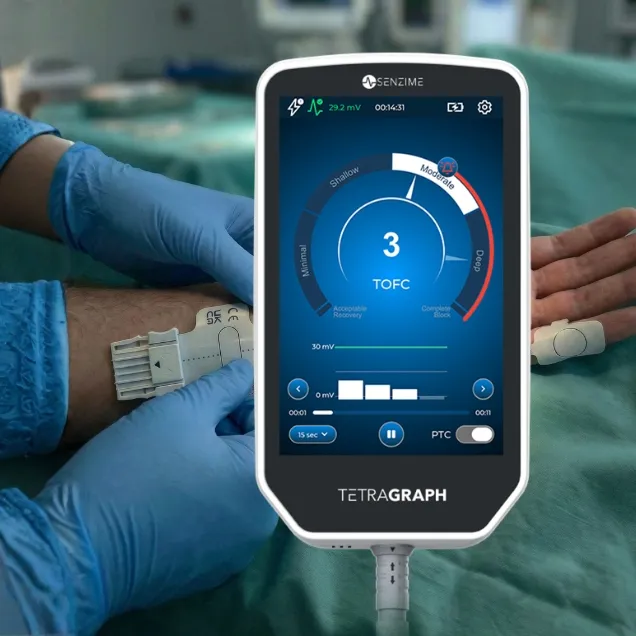
The new Sensor Connection Guidance screen automatically detects lead-off conditions and identifies exactly which electrode pair requires attention, eliminating guesswork when signal quality is compromised. Clear on-screen instructions help clinicians quickly restore connectivity by improving electrode contact. Once signal quality is restored, TetraGraph automatically resumes monitoring and continues delivering reliable measurements, helping minimize interruptions, preserve workflow efficiency, and maintain confidence in the monitoring data throughout the procedure.
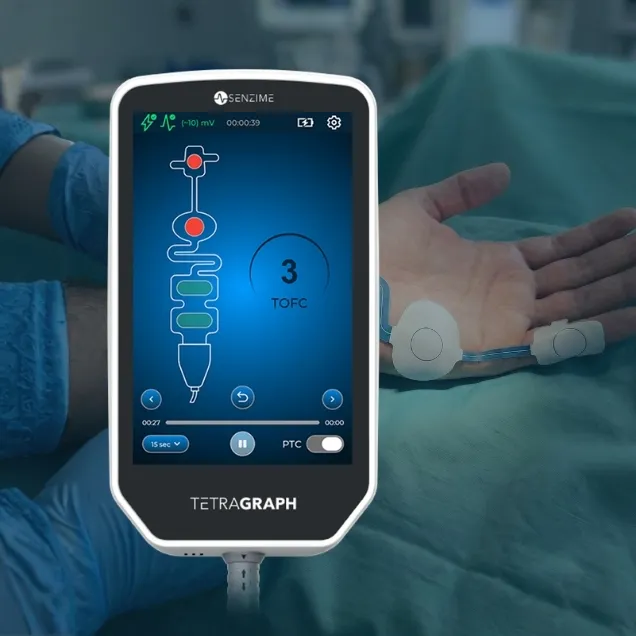
Close the loop with a concise case summary, including trend overview, total case time, and the TOFR value when the case was paused or stopped. From readiness to recovery, TetraGraph helps tell the complete neuromuscular management patient journey. All case summaries are automatically stored and can be accessed at any time through the Case History browser. This provides clinicians with a comprehensive record of every monitored case, enabling retrospective review, clinical learning, and quality improvement.
While the current software already delivers outstanding results, new EMGINE releases introduce a series of innovative features designed to enhance accuracy, workflow, and decision-support—all available as a complimentary, optional upgrade.
- Intubation Readiness Indicator provides objective assessment of neuromuscular block onset before airway management
- Case Alerts deliver timely prompts to support personalized NMBA management during surgery
- Sensor Connection Guidance detects lead-off and pinpoints where adjustment is needed
- Predictive Recovery estimates the likelihood of spontaneous recovery to TOFR ≥ 0.90 within the next 15 minutes
- End-of-Case Summaries provide a concise overview of trends, case duration, and recovery status
- Guided setup with clear, visual signal-strength feedback
- New Quick Start screen with one-touch access to TOF mode for non-depolarizing NMBAs and Single-Twitch mode for depolarizing agents
- New Intubation Readiness Indicator (T1/Tc) for assessing optimal intubating conditions
- Enhanced color cues and unified iconography for faster mode recognition
- Expanded stimulation range with configurable limits for added flexibility and control
- Faster, more intuitive user interface that streamlines every stage of monitoring
- Integrated training and demo mode to help new users learn the system quickly and confidently.
- Introducing Senzime’s 7th-generation EMG monitoring algorithm refined to provide further clinical perfection using over 6 billion real-world datapoints.
- Optimized with unique noise-reduction technology. Ensures consistent, reliable, and accurate data even amidst disturbances in the modern operating room.
Contact your local Senzime representative to upgrade to EMGINE Sirius at no charge.