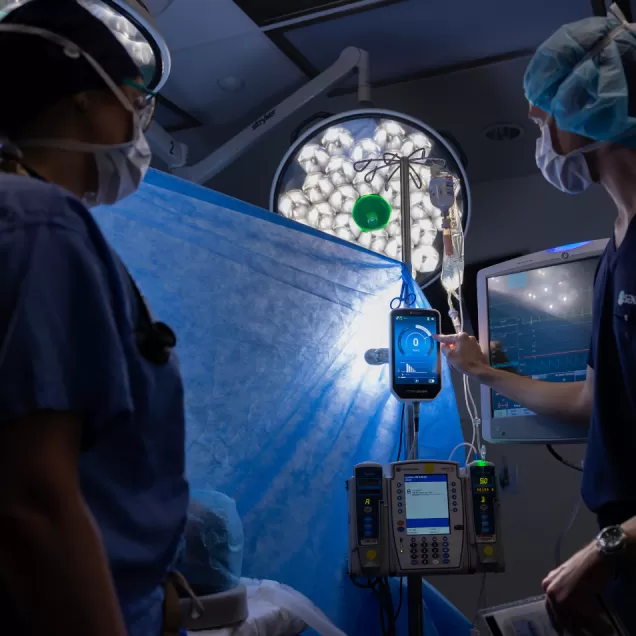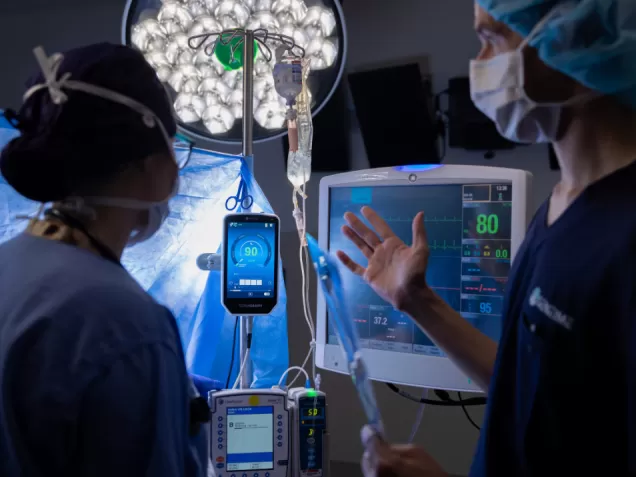
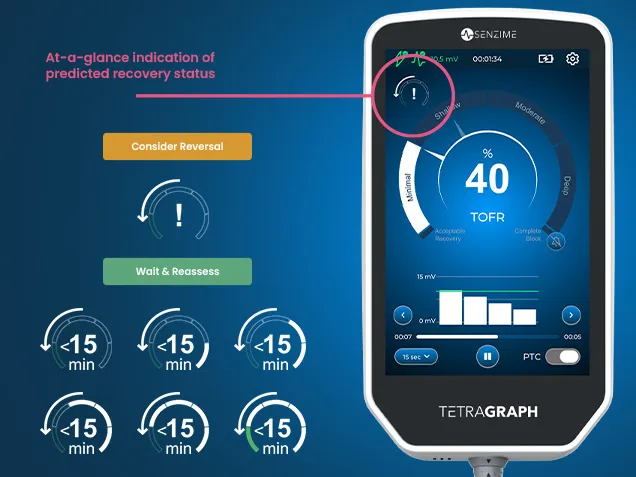
Explore the key features of the next-generation quantitative TOF monitoring.
The industry’s first Level-of-Block Gauge™ and TetraGraph® Adaptive Intelligence™
Designed for smart and essential monitoring, TetraGraph is built on billions of datapoints with the EMGINE™ software suite, elevating the operating room experience with unmatched accuracy.
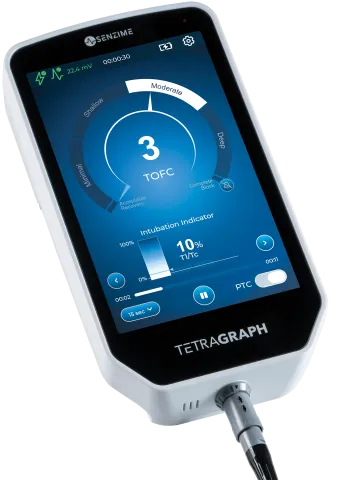
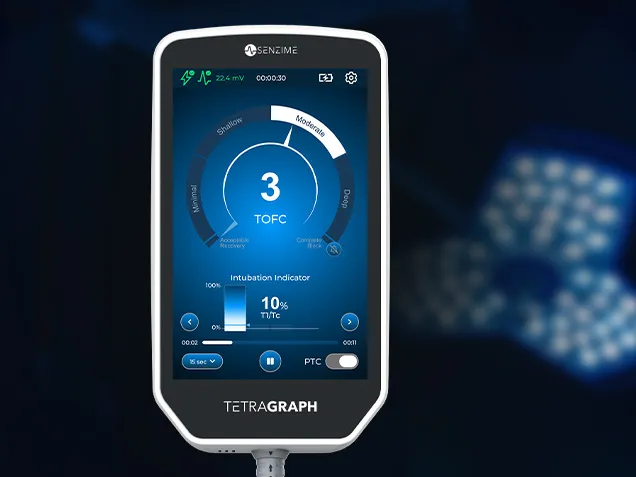
The groundbreaking TetraGraph Level-of-Block Gauge™ simplifies data interpretation across all phases of anesthesia, providing clinicians with the tools to ensure optimal patient care.
Welcome to the next-generation TetraGraph era
Built on decades of science, algorithms refined by real-world data from thousands of patients and the proprietary Level-of-Block Gauge, the next-generation TetraGraph is game changer in neuromuscular monitoring.
Bringing the next-generation TetraGraph into our community hospital has transformed how we manage neuromuscular block.
It has improved patient safety, standardized our practices, and reduced our annual drug spend by more than $100,000.
- Dr. Aaron Persinger
Anesthesiologist, Boulder Valley Anesthesiology Medical Director, UCHealth Broomfield Anesthesiology Medical Director, Pre-Anesthesia Testing Clinic, UCHealth Broomfield
Why choose TetraGraph?
Redefine anesthesia monitoring with TetraGraph's advanced quantitative train-of-four (TOF) capabilities, offering unparalleled accuracy in neuromuscular assessments.
With its slim, portable design, TetraGraph augments any dynamic operating room environment. Multiple mounting options and seamless connectivity ensure flexibility and convenience.
The proprietary EMGINE™ software suite provides algorithms refined to perfection by real-world patient data. Featuring the Level-of-Block Gauge and TetraGraph® Adaptive Intelligence™, TetraGraph ensures optimal signal strength and accurate monitoring even in deep block or when muscle relaxants have already been administered.
Residual neuromuscular block (rNMB) remains a challenge in perioperative care that contributes to increased postoperative complications, prolonged recovery times, and higher healthcare costs.
TetraGraph’s EMG-based monitoring offers a reliable solution, providing real-time neuromuscular assessments with superior accuracy. Compliant with ASA and ESAIC guidelines, it enhances patient safety protocols.
TetraGraph empowers perioperative decisions
TetraGraph features an intuitive interface for easy data trend analysis, empowering clinicians to make informed decisions throughout the perioperative period. Our intelligent EMG analysis with Peak-to-Trough (PtT) analytics ensures optimal patient-centered care, regardless of case complexity.
Unlike other monitors that require extra (ground) electrodes for noise cancellation, TetraGraph integrates a patented, advanced noise-cancelling technology ensuring clean and accurate data thanks to EMGINE™ technology.
Designed with versatility in mind, TetraGraph effortlessly adapts to any operating room environment. It connects seamlessly with external multiparameter monitors and electronic health records (EHR), maximizing efficiency and enhancing patient care.
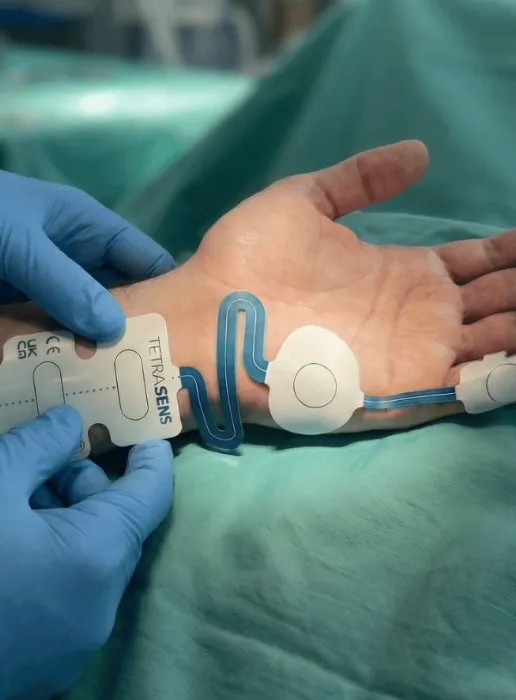
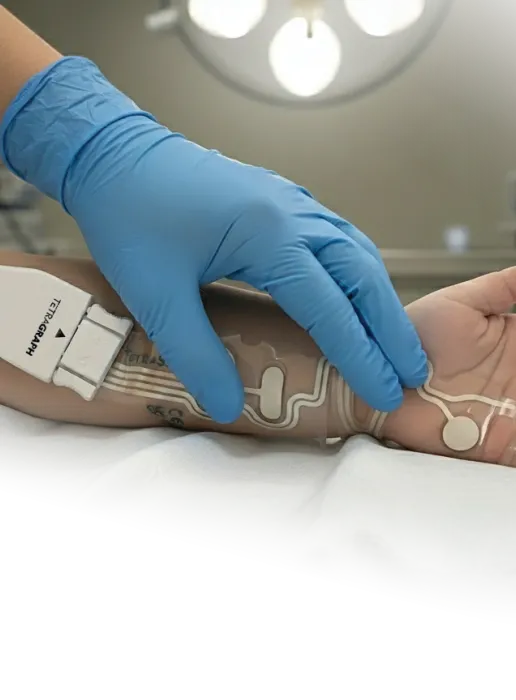
Our flexible EMG sensors and mounting options accommodate various surgical procedures, including those with space and movement limitations like tucked-arm and robotic cases.
Adaptable for adult patients, ensuring precise neuromuscular monitoring for a wide range of surgical applications.
Ultrasoft, flexible material and FDA-cleared EMG sensor with a specific pediatric indication, streamlining one sensor for infants to adolescents.
Customized for geriatrics and those with sensitive skin. Hypoallergenic and latex free with soft edges, including low-profile design.
Proprietary TetraGraph® Adaptive Intelligence™
Series of specialized algorithms automates your workflow from induction to recovery.
Intuitive interface for enhanced clarity
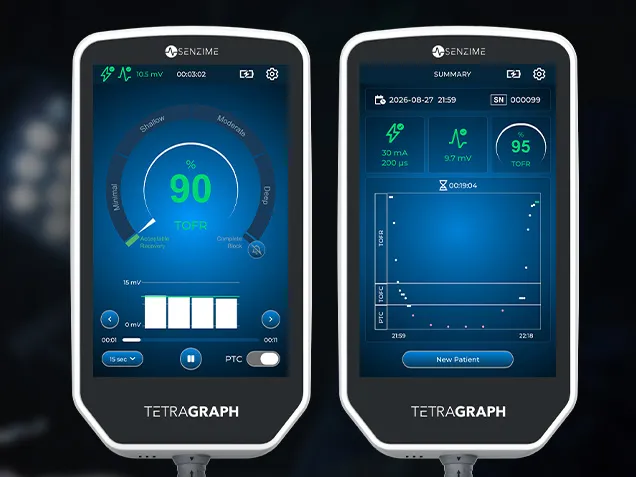
TetraGraph features an intuitive interface, so clinicians can easily view and analyze patient data trends, enhancing decision-making and patient management throughout the perioperative period, including both real-time and post-procedure reviews.
Next-generation TetraGraph vs. other EMG devices
| TetraGraph EMG | Other EMG devices | |
|---|---|---|
| Clinically validated at all levels of block, including deep and profound blocks | Yes | No |
| Proprietary TetraGraph® Level-of-Block Gauge™ for easy-to-interpret, high-resolution, real-time display of individual EMG readings, waveforms (CMAPs) and trends | Yes | No |
| TetraGraph® Adaptive Intelligence™ to optimize signal strength, providing confidence in each reading’s accuracy | Yes | No |
| Backed by over 40 years of research, and developed with insights from global leaders in anesthesiology | Yes | No |
| 7th generation EMG algorithm powered by the EMGINE™ software suite with 4x resolution, superior artifact handling, and noise cancellation without the need for extra electrodes. | Yes | No |
| Complete sensor portfolio, from infants to adults with sensitive skin | Yes | No |
Explore the powerful EMGINE™ technology built on real-world OR cases
TetraGraph's neuromuscular monitoring based on electromyography (EMG) measures the first signal that can be measured after neuromuscular transmission, making it the most accurate technology available.
Learn how it works in the video!
Choose TetraGraph for superior accuracy and precision
Recent clinical studies demonstrate TetraGraph’s superior accuracy and precision, making it a reliable choice for quantitative TOF monitoring.
TetraGraph is developed with eco-friendly materials and a fossil-free energy manufacturing process, reflecting our commitment to sustainability.
Its future-proof platform is ready for upcoming software features, ensuring it remains at the forefront of technological innovation.
TetraGraph is more than just a product—it's a comprehensive solution designed to enhance your daily practice. From induction to recovery, TetraGraph offers real-time insights and guidance, ensuring safer and more efficient patient care.
Start your journey today!
A complete overview of the next-generation TetraGraph, including tech specs
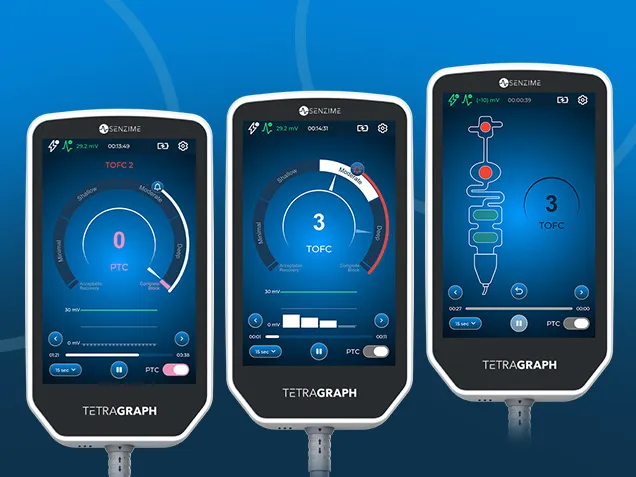
Three unique trend views to elevate clinical confidence
Note: The TetraGraph system is available in the United States through 510(k) clearance. It is also available in Australia and Japan. In the European Economic Area (EEA), it is available with CE certification, subject to local language translation requirements. For availability in other regions, please contact us.
TetraGraph is a widely studied system
- Nazira W, Villalobosa EE, Padillaa SP, Mavesa G, Tobias JD, Quantitative Train-of-Four Monitoring Using the TetraGraph to Evaluate Rocuronium Requirements During Renal Transplantation in a Pediatric Patient, J Med Cases. 2025;16(9):331-336
- Danielsons S, Welter J, Dullenkopf A, 2025, Observational Cohort Study of TetraGraph® Electromyography Compared to Standard Acceleromyography Monitoring, Journal of clinical medicine - Volume 14, Issue 17, pp
- Chaney A, Villalobos EE, Rice-Weimer J, Tobias JD, Intraoperative Electromyographic Monitoring in Children Less Than 1 Year of Age, Paediatric anaesthesia - Volume 35, Issue 11, pp. 934-939
- Werner, Sarah J., Georgevici, Adrian I., Weber, Thomas P., Klutzny, Mitja, Dencks, Stefanie, Oblisz, Nico, Gude, Philipp, Herzog-Niescery, Jennifer, Quantifying the effect of succinylcholine on vocal cord opening using electromyographic single twitch for facilitated mask ventilation: a prospective observational study, Trends in Anaesthesia and Critical Care - Volume 62, Issue 0, pp. 101564
- Herzog-Niescery J, von der Gönna M, Werner S, Weber T and Georgevici A, The electromyographic single twitch stimulation for monitoring the effect of rocuronium on vocal cord opening – a randomised controlled trial
- Asztalos L, Boktor M, Kukuly M, Sólyom D, Pongrácz A, Brull S, Fülesdi B, The Relationship Between Neuromuscular Block Depth and Airway Retroglossal Area: A Prospective, Nonrandomized, Observational Clinical Trial
- Hernandez V, Chaves-Cardona H, Rivero A, Matus M, Logvinov I, Brull S, Renew J, Comparison of adductor pollicis and flexor hallucis brevis muscle electromyographic responses: a prospective cohort study
- Fülesdi B, Luterán P, Boktor M, Asztalos L, Nagy G, Brull SJ, Molnár C. Time Course of a Single, 0.6 mg/kg Dose of Rocuronium Neuromuscular Block During Sevoflurane or Propofol Anesthesia in Infants—A Prospective, Randomized Trial. Journal of Clinical Medicine. 2025; 14(18):6459.
- Wedemeyer Z, Michaelsen KE, Jelacic S, Silliman W, Lopez A, Togashi K, Bowdle A Accuracy and Precision of Three Acceleromyographs, Three Electromyographs, and a Mechanomyograph Measuring the Train-of-four Ratio in the Absence of Neuromuscular Blocking Drugs Anesthesiology - Volume 141, Issue 2, pp. 262-271 2024.
- Epstein RH, Nemes R, Renew JR, Brull SJ Area under the curve and amplitude of the compound motor action potential are clinically interchangeable quantitative measures of neuromuscular block: a method comparison study BJA open - Volume 11, Issue , pp. 100293 – 2024.
- Ebert TJ, Vogt JA, Kaur R, Iqbal Z, Peters DJ, Cummings CE, Stekiel TA. Train-of-four ratio, counts and post tetanic counts with the TetraGraph electromyograph in comparison to mechanomyography. Journal of clinical monitoring and computing - Volume , Issue , pp. Online ahead of print - 2024
- Tobias JD, Epstein RH, Rice-Weimer J, Yemele Kitio SA, Brull SJ, Kalsotra S. Pediatric Intraoperative Electromyographic Responses at the Adductor Pollicis and Flexor Hallucis Brevis Muscles: A Prospective, Comparative Analysis. Anesthesia and analgesia - Volume 139, Issue 1, pp. 36-43 - 2024
- Haberkorn S, Twite M, Klockau K, Whitney G, Faulk DJ. Quantitative Monitoring Maximizes Cost-Saving Strategies When Antagonizing Neuromuscular Block With Sugammadex. Cureus - Volume 16, Issue 9, pp. e68551 -2024
- Espinal LM, Kalsotra S, Rice-Weimer J, Kitio SAY, Tobias JD. Tolerance to preoperative placement of electrodes for neuromuscular monitoring using the TetraGraph. Saudi journal of anaesthesia - Volume 18, Issue 2, pp. 205-210 – 2024
- Verdonck M, Carvalho H, Fuchs-Buder T, Brull SJ, Poelaert J. Machine learning based analysis and detection of trend outliers for electromyographic neuromuscular monitoring. Journal of clinical monitoring and computing - Volume 38, Issue 5, pp. 1163-1173, 2024
- Kalsotra et al, 2023 Intraoperative electromyographic monitoring in children using a novel pediatric sensor. Saudi journal of anaesthesia - Volume 17, Issue 3, pp. 378-382 - published 2023-07-01
- Chaves-Cordona et al, 2023 Comparison of onset of neuromuscular blockade with electromyographic and acceleromyographic monitoring: a prospective clinical trial. Brazilian journal of anesthesiology (Elsevier) - Volume 73, Issue 4, pp. 393-400 - published 2023-07-01
- Renew et al, 2023 Comparison of visual and electromyographic assessments with train-of-four stimulation of the ulnar nerve: a prospective cohort study. Canadian journal of anaesthesia - Volume 70, Issue 5, pp. 878-885 - published 2023-05-01
- Iwasaki et al, 2023 The impact of electrosurgical devices on electromyography-based neuromuscular monitoring during abdominal laparotomy: a case series. Journal of clinical monitoring and computing - Volume 37, Issue 4, pp. 1111-1114 - published 2023-08-01.
- Owuso-Bediako et al, 2022, Feasibility of intraoperative quantitative neuromuscular blockade monitoring in children using electromyography Saudi J Anaesth. 2022 Oct-Dec; 16(4): 412–418.
- Sato et al. Comparison of two electromyography-based neuromuscular monitors, AF-201P and TetraGraph, in rocuronium-induced neuromuscular block: A prospective comparative study. Anaesth Crit Care Pain Med. 2022 Aug 31;41(6):101145
- Iwasaki et al. A Comparison Between the Adductor Pollicis Muscle Using TOF-Watch SX and the Abductor Digiti Minimi Muscle Using TetraGraph in Rocuronium-Induced Neuromuscular Block: A Prospective Observational Study. Anesth Analg. 2022 Aug 1;135(2):370-375
- Giorgio Giudici, Federico Piccioni, Paolo Proto, Franco Valenza, A comparison of accelerometric monitoring by TOF Watch® SX and electromyographic monitoring by TetraGraph for recovery from neuromuscular blockade, Journal of Clinical Anesthesia, Volume 75, 2021,110481
- Nemes, R, Lengyel, S, Nagy, G., Hampton, D.R., Gray, M, Renew J.R., Tassonyi, E, Fülesdi, B, Brull S.J., Ipsilateral and Simultaneous Comparison of Responses from Acceleromyography- and Electromyography-based Neuromuscular Monitors. Anesthesiology, 2021, Newly published on July 30
- Renew JR, Hernandez-Torres V, Logvinov I, Nemes R, Nagy G, Li Z, Watt L, Murphy GS, Comparison of the TetraGraph and TOFscan for monitoring recovery from neuromuscular blockade in the Post Anesthesia Care Unit., J Clin Anesth, 2021, Aug;71:110234
- Renew JR, Hex K, Johnson P, Lovett P, Pence R. Ease of Application of Various Neuromuscular Devices for Routine Monitoring. Anesth Analg. 2021 May 1;132(5):1421-1428. Nemes R, Nagy G, Murphy GS, Logvinov II, Fülesdi B, Renew JR. Awake Volunteer Pain Scores During Neuromuscular Monitoring. Anesth Analg. 2020 Apr;130(4):941-948.
Abstracts with TetraGraph
- S Paredes, A Smith, L Puertas-Ocio, E villalobos, W Nazir, S A Y Kitio, J Rice-Weimer, J D Tobias, Train-of-four monitoring using (TetraGraph ) to evaluate rocuronium infusion requirements during major surgery, 2025
- Villalobos 2025 - Intraoperative Neuromuscular Monitoring Electromyography Monitor vs. PNS- Does the Face Lie
- A Chaney, E Villalobos, J Rice-Weimer, J.D. Tobias, Intraoperative electromyographic monitoring in children less than 1 year of age 2025
- S Waite, P Raju, G Rodney, Measurement of System Usability- validating the system usability score within anaesthesia 2024
- J Herzog-Niescery, S Werner, S Dencks, T Weber, A Georgevici, Quantifizierung de suciinylcholin-Wirkung auf die Stimmbandöffnungsfläche mittels electromyografischem signle twitch monitoring, 2024
- E Villalobos, S padilla, Sj Brull, J Tobias, Intraoperative Neuromuscular Monitoring: Electromyography Monitor Versus Peripheral Nerve Stimulator – Does the Face Lie? A Case Report.2024
- P Frykholm, Delayed onset of atracurium detected by neuromuscular monitoring with the TetraGraph paediatric electrodes. First experience with a new device in small children.2024
- S Haberkorn, M Twite, K Klockau, G Whitey, A Quality Improvement Project to Reduce Sugammadex Cost and Waste by Using Aliquots and Quantitative Neuromuscular Monitoring SPA 2023
- R Kaur, J vogt, E Shibly, D peters, Z Iqbal, S Gandhi, T Ebert, Validation clinical important neuromuscular monitoring endpoints: Mechanomyography vs. electromyograph IARS 2023
- RH Epstein, R Nemes, JR Renew, SJ Brull, Optimization of the Timing of Laryngoscopy Using Quantitative Neuromuscular Blockade Monitoring: An Exploratory Analysis, Anesthesiology 2022.
- P Majou, C Meistelman, S Brull Comparison of the TOFscan and the TetraGraph during recovery of neuromuscular block : a pilot study, 2022
- J Renew, V Hernandez-Torres, R Nemes, G Murphy, Multicenter study comparing the ToFscan and TetraGraph during Recovery of Neuromuscular Function in the Post Anesthesia Care Unit 2021
- R Munch, J Mathias, J Tobias, K Owusu-Bediako, Characteristics of quantitative train-of-four monitoring in children using electromyography.
- L Puertas-Ocio, J Tobias, K Owusu-Bediako. Intraoperative pediatric neuromuscular monitoring in laparoscopic (restricted arm access) surgical setting.
- K Owusu-Bediako, S Kim, J Rice-Weimer, J Tobias, Feasibility Of Pediatric Neuromuscular Monitoring In Laparoscopic (restricted Arm Movement) Surgical Settings
- M Twite, B Smith, R Ing. The use of Quantitative Neuromuscular Monitoring to Understand Neuromuscular Blockade, Re-dosing, Reversal and Residual Blockade in Children undergoing Cardiac Catheterization Procedures
- K Owusu-Bediako, S Kim, J Rice-Weimer, J Tobias, Quantitative Train-of-four Monitoring In Pediatric Patients Using Electromyography. Anesthesiology 2021.
- V Hernandez, H Chaves-Cardona, A Rivero, M Matus, JR Renew, SJ Brull. Comparison of adductor pollicis and flexor hallucis brevis muscles (thumb vs. great toe) as sites for neuromuscular monitoring with electromyography after sugammadex antagonism. Anesthesiology 2021
- V Hernandez, H Chaves-Cardona, M Restrepo-Holguin, JR Renew, SJ Brull. Electromyography for the detection of residual neuromuscular block in clinical practice: a systematic review and meta-analysis. Anesthesiology 2021.
- JR Renew, V Hernandez-Torres, R Pence, SJ Brull. Comparison of visual and electromyography assessments in response to train-of-four stimulation of the ulnar nerve. Anesth Analg. Presented IARS 2021.
- V Hernandez, H Chaves-Cardona, JR Renew, SJ Brull. Electromyographic And Acceleromyographic Monitoring In Restricted Arm Movement Surgical Setting. A Prospective, Randomized Trial. Anesthesiology 2021; A2069
- A Creighton, D Kim, S Liang, P A Stewart, Comparison of two muscles using a novel electromyographic device to assess recovery from muscle relaxants in patients undergoing general anaesthesia. ASA NCS 2019
- R Nemes, J. Renew Comparison of Electromyography Derived Train-Of-Four Ratios of the Adductor Pollicis and Abductor Digiti Minimi Muscles and Their Comparison to Acceleromyography Derived Train-Of-Four Ratios, STA meeting
- J Renew , A Donaldson , I Logvinov , R Chadha , R McClain , R Nemes, Comparative Investigation Of AMG- And EMG-Based Neuromuscular Monitors, P-9113, 2018 NY PGA