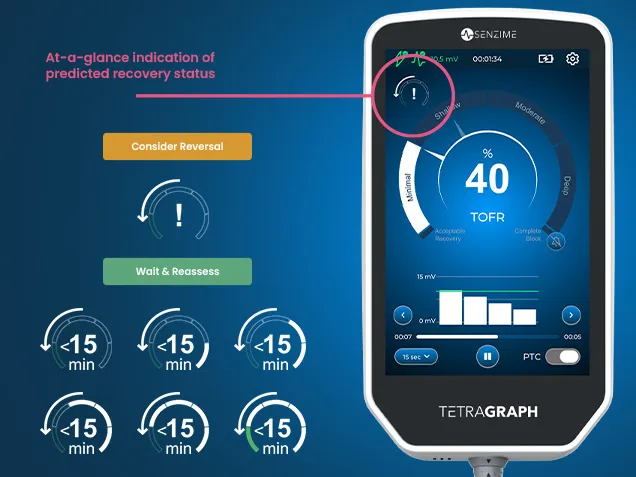
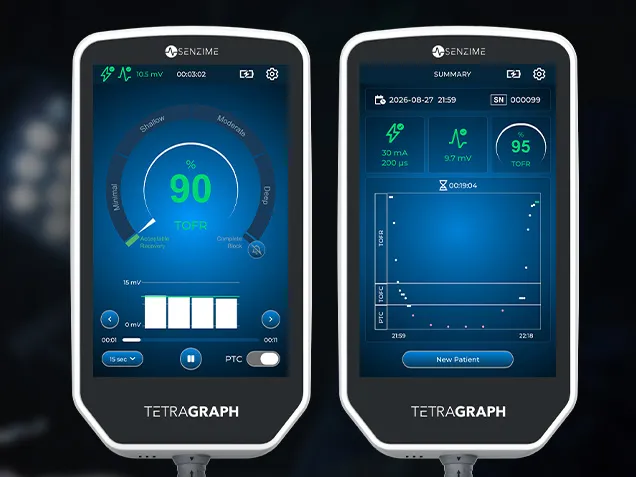
Next-generation TetraGraph version is out!
Explore it now.
-
Accurate, validated data powered by a unique EMG algorithm with advanced noise-canceling technology, based on 40+ years of research
-
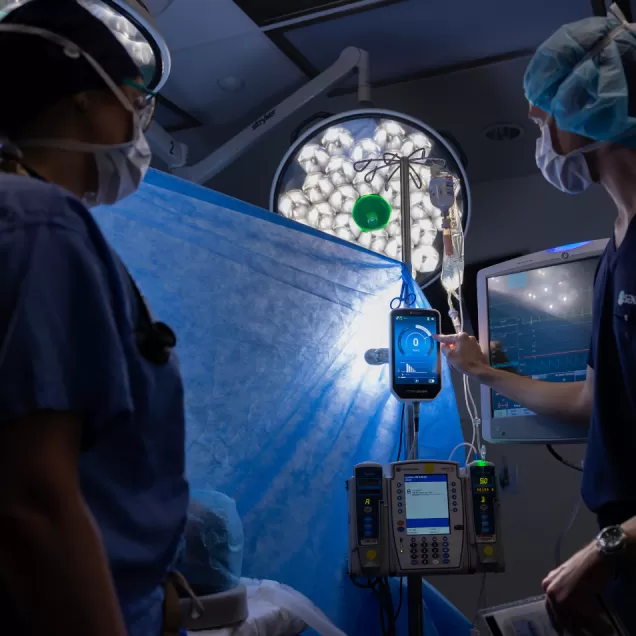
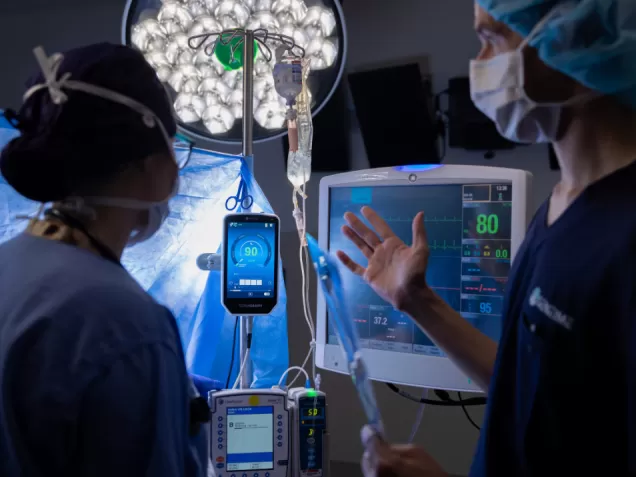
Small and portable monitor to easily fit into every operating room
-
Easy to use with one-button start, guiding your choice of NMBA dosing and reversal strategy with precision
-
Trusted by thousands of clinicians worldwide
Advanced EMG algorithm guides your decisions with accuracy from start to finish, ensuring adequate drug dosing and safe extubation.
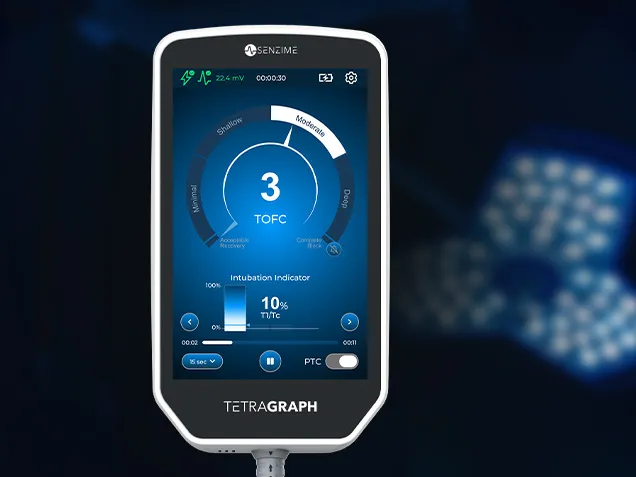
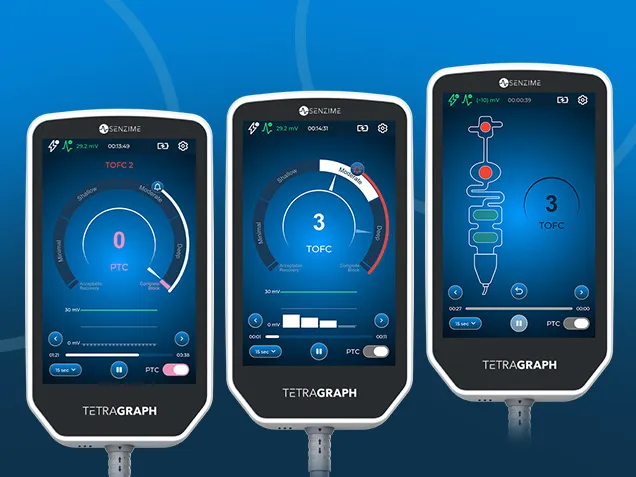
Quick and intuitive set up, designed with users in mind. Easy views for TOF bars, real-time EMG curves and case trend graph.
Perfect fit for all your patients from fragile infants to adults, and for all kind of cases. Flexible sensor placements on either hand or foot. Arm/foot can be tucked.
Extensive support beyond technology, ensuring streamlined implementation and optimized workflow in your facility.
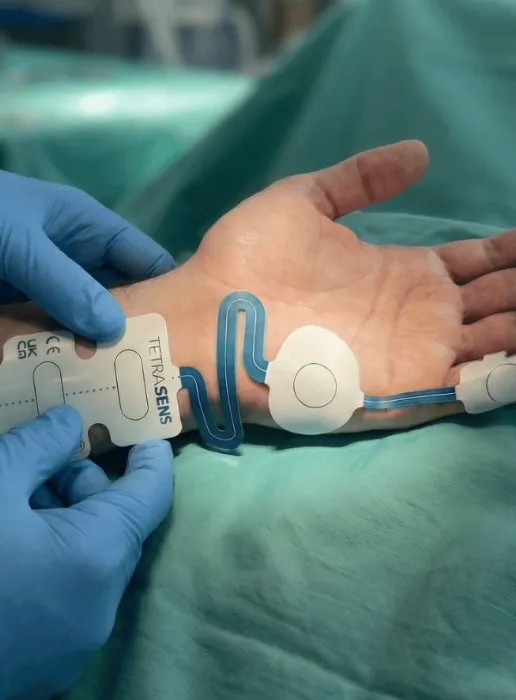
Flexible sensors for all your patient needs
Same trusted technology across your hospital
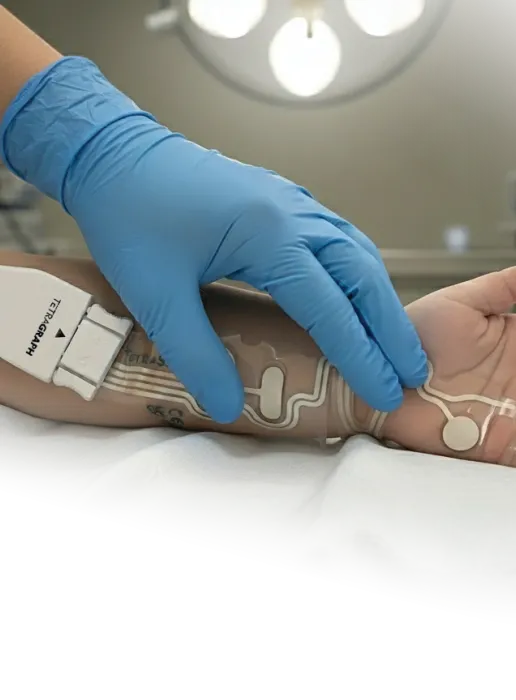
Our TetraGraph sensors deliver electrical stimulation to the peripheral nerve and directly measure the evoked electromyographic (EMG) response of the muscle (compound muscle action potential, CMAP). This provides a precise and automatic measurement of muscle response to a stimulus. The sensors are available in several editions.
Based on true EMG for accurate measurements
- Higher precision than acceleromyography (AMG) as TetraGraph measures the compound muscle action potential (CMAP)
- Independent of hand or thumb movement, arm can be tucked
- Superior algorithm validated for accuracy against MMG (mechanomyography) at all levels of block, with integrated noise-canceling technology ensuring precise measurements without the need for extra electrodes
TetraGraph EMG vs conventional AMG monitoring
| TetraGraph EMG | AMG | |
|---|---|---|
| Based on quantitative monitoring technology | Yes | Yes |
| Measure compound muscle action potential, CMAP | Yes | No |
| No thumb or hand access needed | Yes | No |
| All types of surgeries | Yes | No |
| Monitors all patients reliably, including pediatric patients | Yes | No |
| Does not require normalization due to reverse fade phenomenon | Yes | No |
| Does not overestimate recovery | Yes | No |
TetraGraph Classic EMG vs other EMG devices
| TetraGraph EMG | Other EMG devices | |
|---|---|---|
| Clinically validated at all levels of block | Yes | No |
| EMG algorithm backed by 40+ years of research | Yes | No |
| Invented by an anesthesiology expert in neuromuscular blockade | Yes | No |
| 5th generation advanced EMG algorithm with precise EMG readings, superior artifact handling, and integrated noise-canceling technology without the need for extra electrodes | Yes | No |
| Easy to interpret, high resolution, real-time display of individual EMG waveforms (CMAPs) | Yes | No |
| Objective signal strength, providing confidence in the reading accuracy | Yes | No |
| Complete sensor portfolio, from infants to adults with sensitive skin | Yes | No |
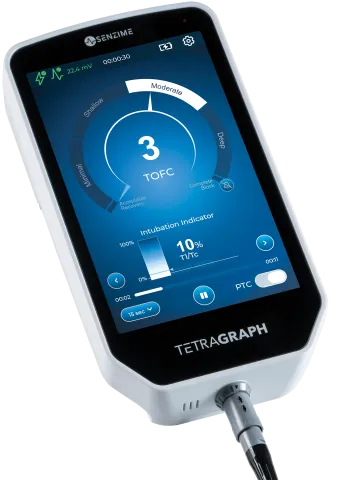
TetraGraph is a CE marked, FDA cleared quantitative neuromuscular monitor, based on EMG which measures the compound muscle action potential – the very first signal.
The product measures the effect of NMBAs simply and precisely, supporting clinicians in decision-making on the level of neuromuscular function in real time and helps to determine when it is safe to extubate the patient after surgery.
The system consists of a portable, handheld patient monitoring device and disposable sensors.
TOF mode is TetraGraph’s main mode of operation. A sequence of four stimuli, at a frequency of 2 Hz, referred to as Train-of-Four (TOF) is delivered to the peripheral nerve and the Train-of-Four Ratio (TOFR) and the TOF Count (TOFC) of the evoked EMG responses are calculated and displayed.
Other operating modes are Post-Tetanic Count (PTC), which is used to determine NMBA management during surgeries that require deep block, and Single Twitch, which is used to deliver a single stimulus and display a single muscle response in millivolt (mV).
Arm can be tucked
Since EMG technology does not depend on thumb or hand movement, TetraGraph is an excellent neuromuscular monitoring solution for robotic surgeries.
- The patient’s arm can be tucked under surgical drape.
- The flexible TetraSens is suitable to use during any patient procedure and position.
- Best solution during deep blockade due to higher responsiveness
- Small footprint and portable device that easily fits in the OR
Streamlining your ICU workflow
TetraGraph is an effective tool to address the daily challenges of paralytic monitoring in the intensive care setting and provides continuous and accurate results.
- Supports nursing and time efficiency
- No more manual twitch counting, saving time
- Any patient position: prone, swimming, supine
- Start-up in seconds - no calibration needed
- Automated operation and confident titrations of drugs
"At our institution approximately 8,000 patients per year receive neuromuscular blocking drugs and reversal, and we see possible annual net savings of USD 370,000 using an EMG-monitor as TetraGraph.
Mark Twite
Professor of Anesthesiology at the University of Colorado & MD at Children's Hospital Colorado
References
Nemes et al- Ipsilateral and Simultaneous comparison of responses from Acceleromyography- and Electromyography- based Neuromuscular Monitors, Anesthesiology 2021 Oct 1;135(4):597-611
R. Kaur, J. Vogt, E. Shibly, D. Peters, Z. Iqbal, S. Gandhi, T.J. Ebert, Department of Anesthesiology, Medical College of Wisconsin and CJ Zablocki VA Medical Center Milwaukee, WI. Validating Clinically Important Neuromuscular Monitoring Endpoints: Mechanomyography (MMG) vs Electromyography (EMG). Abstract presentation at IARS, Denver April 14-16, 2023.
Note: The TetraGraph system is available in the United States through 510(k) clearance. It is also available in Australia and Japan. In the European Economic Area (EEA), it is available with CE certification, subject to local language translation requirements. For availability in other regions, please contact us.