
Neuromuscular Monitoring ROI: How Much Can Your Facility Save?

Quantitative neuromuscular monitoring delivers measurable ROI by improving drug utilization, accelerating recovery, and reducing costly postoperative complications.
Use this page to understand the key financial drivers and request access to an interactive ROI calculator to estimate savings for your facility.
The Three Financial Levers of Quantitative Neuromuscular Monitoring
Across hospitals and Ambulatory Surgery Centers (ASCs), ROI from quantitative neuromuscular monitoring is driven by three repeatable financial levers that scale with volume.
1. Reversal Drug Cost Reduction
Avoid unnecessary sugammadex use and optimize dosing
Quantitative monitoring enables individualized dosing and reversal decisions:
- ~20% of patients can avoid sugammadex when objective monitoring confirms adequate recovery (1)
- Remaining patients receive lower, evidence based doses, reducing overuse and waste (1)
- 87% of patients required less sugammadex than the recommended dose (2)
Financial impact
Small per‑case savings add up quickly at high volume. Facilities have reported six‑figure annual drug savings without compromising safety:
Bringing the next-generation TetraGraph into our community hospital has transformed how we manage neuromuscular block.
It has improved patient safety, standardized our practices, and reduced our annual drug spend by more than $100,000.- Dr. Aaron Persinger
Anesthesiologist, Boulder Valley Anesthesiology Medical Director, UCHealth Broomfield Anesthesiology Medical Director, Pre-Anesthesia Testing Clinic, UCHealth Broomfield
2. PACU Efficiency Gains
Reduce prolonged recovery caused by residual paralysis
Patients with postoperative residual curarization (PORC) stay in PACU up to 80 minutes longer on average (3). Quantitative monitoring reduces PORC rates and enables faster, more predictable recovery.
Operational impact
- Shorter PACU length of stay
- Improved bed availability
- Better staffing efficiency
Financial impact
Increased throughput and reduced overtime improve both cost control and revenue potential.
3. Complication Cost Avoidance
Prevent high cost postoperative pulmonary complications
Postoperative pulmonary complications are costly and can drive multi‑million‑dollar annual costs at large hospitals. Residual neuromuscular block contributes to PPCs, including hypoxemia and reintubation. (4)
Quantitative monitoring is associated with:
- Up to 41% reduction in post-operative complications (4,5)
- Fewer ICU admissions
- Shorter hospital length of stay
Financial impact
Even partial reductions in PPC rates generate outsized savings while improving quality metrics.
The ROI Model — Inputs and Outputs
With just a few facility‑specific inputs, the ROI model translates clinical performance into financial impact. Enter your data to receive access to the ROI calculator and estimate your potential annual savings.
Published Benchmarks — Real Data From Real Institutions
Multiple institutions have reported measurable financial and clinical impact after implementation of quantitative neuromuscular monitoring.
Below are key peer‑reviewed and quality‑improvement, real-world benchmarks.
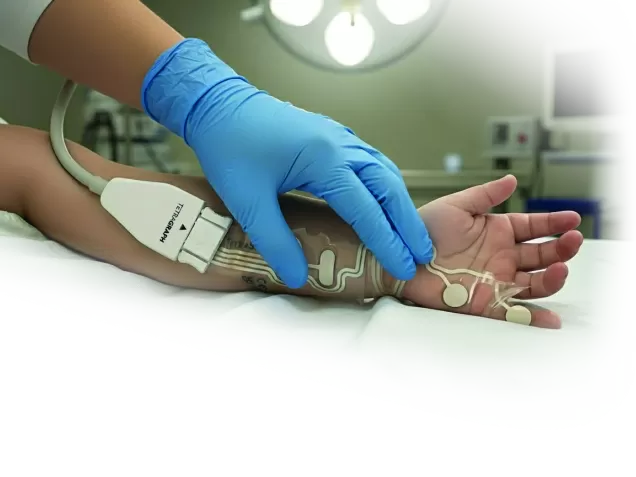
Haberkorn et al. — Children’s Hospital Colorado (1)
This study evaluated the use of quantitative TOF monitoring with TetraGraph in a high‑volume pediatric hospital.
Key findings include:
- Net savings of ~$46 per case
- ~$370,000 in annual savings at approximately 8,000 cases
- 20% of patients required no reversal agent
- Patients not receiving reversal accounted for ~40% of total savings
The study shows that optimized reversal decisions alone can generate significant ROI.
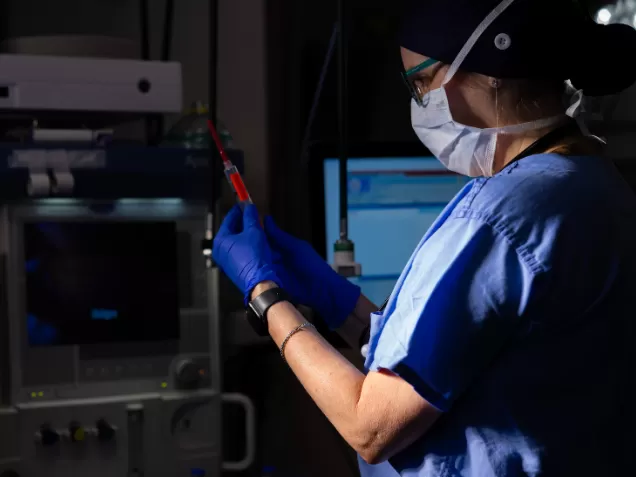
Merkow RP et al. — Multi‑Campus Quality Improvement Study (4)
This quality-improvement initiative evaluated the impact of implementing quantitative TOF monitoring across multiple campuses.
Key findings include:
- 41% reduction in postoperative respiratory complications (measured using AHRQ PSI‑11)
- Increased drug use reflected better dosing decisions, not waste
The study demonstrates that improved monitoring can reduce complications while supporting safer, data-driven reversal practices.
Beyond Drug Savings — The Hidden Cost of Not Monitoring
Drug savings are easy to measure, but the largest costs come from delayed recovery, complications, and unplanned care without proper monitoring.
PORC‑Related Reintubation
Residual neuromuscular block can lead to postoperative respiratory failure. A single reintubation event often triggers:
• ICU bed utilization
• Extended mechanical ventilation
• Additional nursing time
• Increased physician management and respiratory therapy
Estimated cost impact is $20,000–$40,000 or more per event (6). Even infrequent events can erase annual drug savings in a matter of days.
Postoperative Pulmonary Complications
Postoperative pulmonary complications are among the most expensive adverse events. Reducing complication rates doesn’t just lower treatment expenses, but also impacts:
• ICU utilization
• Length of stay
• Readmissions
• Quality and safety performance metrics
Liability and Guideline Risk
Professional guidance has evolved. The 2023 ASA guidelines (7) recommend quantitative neuromuscular monitoring to reduce the risk of residual paralysis. In the setting of a PORC‑related adverse event, failure to follow guideline‑supported monitoring practices may increase institutional liability exposure.
In this context, not monitoring becomes the higher‑cost option.
Quantitative neuromuscular monitoring has limited upfront cost and is often offset by drug savings alone.
Equipment Costs
- TetraGraph® monitor is capital equipment with flexible contracting options, including institutional purchasing, IDN agreements, and Group Purchasing Organization (GPO) contracts. Pricing may be structured at the unit, department, or enterprise level.
Per Case Disposable Cost
- TetraSens disposable sensor. Pricing varies based on volume and contract terms. In Haberkorn S, Faulk DJ, et al. 2024, the approximate cost was $27 per case.
Optional Connectivity
- TetraHub and/or TetraCom
Optional modules for integration into multi-parameter monitors (MPMs) or electronic health records (EHRs). Pricing varies based on volume and contract terms.
Break Even Economics
Published data (1) show ~$46 net savings per case from optimized reversal practices alone.
At this savings level:
- Facilities with 4,000+ rocuronium reversal cases per year typically recover monitor acquisition costs
- Payback often occurs within 12 months, driven by drug savings and before efficiency or complication savings are included
Financing Options
Flexible acquisition options to fit your budget and utilization, including capital purchase or sensor‑based programs that reduce or eliminate upfront costs.
Request a customized ROI analysis from the Senzime team to estimate savings for your facility.
Quantitative neuromuscular monitoring delivers ROI through reduced reversal drug use, faster PACU recovery, and fewer postoperative pulmonary complications. Savings increase with case volume and scale across facilities.
Published data report approximately $46 in net savings per case with TetraGraph, primarily from optimized reversal decisions and reduced unnecessary drug use.
Many facilities recover the cost within 12 months, based on drug savings alone. High‑volume sites may break even sooner.
Please note: This page is intended for healthcare professionals. It is primarily tailored to the U.S. market, but may also be relevant for other regions.
References
- Haberkorn S, Faulk DJ, et al. “Quantitative Monitoring Maximizes Cost-Saving Strategies When Antagonizing Neuromuscular Block with Sugammadex.” Cureus, 2024; 16(9): e68551. DOI: 10.7759/cureus.68551
- Bowdle TA, Haththotuwegama KJ, Jelacic S, Nguyen ST, Togashi K, Michaelsen KE. A Dose-finding Study of Sugammadex for Reversal of Rocuronium in Cardiac Surgery Patients and Postoperative Monitoring for Recurrent Paralysis. Anesthesiology. 2023 Jul 1;139(1):6-15. doi: 10.1097/ALN.0000000000004578. PMID: 37027807.
- Butterly A, et al.: Postoperative residual curarization from intermediate-acting neuromuscular blocking agents delays recovery room discharge. Br J Anaesth 2010; 105:304–309.
- Merkow RP et al., A Comprehensive Estimation of the Costs of 30‑Day Postoperative Complications Using Actual Costs from Multiple, Diverse Hospitals, Jt Comm J Qual Patient Saf. 2020;46(10):558–564. PMID: 32888813.
- Goriacko P., et al: Optimizing neuromuscular block monitoring and reversal: A large-scale quality improvement initiative in a diverse healthcare setting, Journal of Clinical Anesthesia, Volume 101, 2025, 111709, ISSN 0952-8180, https://doi.org/10.1016/j.jclinane.2024.111709
- Murphy GS. Residual Neuromuscular Blockade: A Continuing Patient Safety Issue. Anesthesia Patient Safety Foundation Newsletter. 2020. URL: https://www.apsf.org/article/residual-neuromuscular-blockade-a-continuing-patient-safety-issue/
- Thilen SR, Weigel WA, Todd MM, et al. 2023 American Society of Anesthesiologists Practice Guidelines for Monitoring and Antagonism of Neuromuscular Blockade: A Report by the American Society of Anesthesiologists Task Force on Neuromuscular Blockade. Anesthesiology. 2023;138(1):13–41. doi:10.1097/ALN.0000000000004379