
Neuromuscular Monitor with EHR Integration: Automate Compliance Documentation
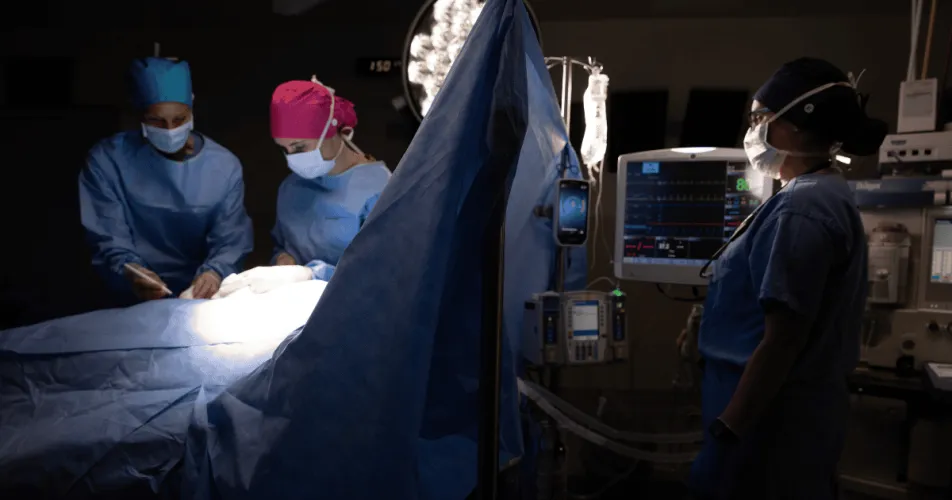
Objective neuromuscular monitoring is becoming increasingly important for perioperative quality, compliance, and patient safety initiatives. On this page, you’ll learn:
- Why manual TOF documentation often fails in busy OR workflows
- How TetraCom™ automates neuromuscular data transmission from TetraGraph into Epic, Oracle Health (Cerner), and any HL7-compatible electronic health record (EHR) system
- The workflow and documentation benefits of automated neuromuscular monitoring integration
- How automated documentation may help support ASA guideline compliance
- Key differences between the TetraGraph and TetraCom connectivity approach and other neuromuscular monitoring integration solutions, including TwitchView®
The Documentation Problem — Why Manual TOF Charting Fails
Manual documentation of train-of-four (TOF) values remains a common challenge in perioperative workflows. In busy operating rooms, neuromuscular monitoring data may be documented inconsistently, entered retrospectively, or missed entirely, creating workflow inefficiencies and potential compliance gaps.
The combination of the next-generation TetraGraph® and TetraCom™ was designed to help simplify this process. TetraCom enables automatic HL7-based transmission of TetraGraph data into Epic, Oracle Health (Cerner), and any HL7-compatible EHR system.
Manual charting may present several challenges, including:
- Missed TOF measurements during busy cases
- Retrospective documentation
- Transcription errors
- Variability in documentation practices between providers

In a large multi-campus quality improvement study, baseline TOF documentation rates were reported in only 42–48% of applicable cases. [1]
Documentation compliance improved to approximately 83% following implementation of a multifaceted quality improvement program that included electronic workflow prompts, clinician education, audit and feedback, and site-specific performance incentives, demonstrating the value of integrating quantitative neuromuscular monitoring into clinical workflows. [1]
How TetraCom Works — Architecture Explained Simply
TetraCom was launched in February 2026 as a dedicated connectivity platform for neuromuscular transmission data. [2] The system combines compact hardware, cloud-based software architecture, and standardized HL7 messaging to automate data transmission from TetraGraph directly into the EHR.
The workflow is straightforward:
1. TetraGraph captures objective EMG-based neuromuscular measurements
2. TetraCom securely transmits the data wirelessly
3. HL7 messaging sends the information to the hospital EHR or anesthesia information management system (AIMS)
4. Measurements are automatically documented with timestamps
This includes:
• TOF ratio
• TOF count
• Post-tetanic count (PTC)
TetraCom is designed around universal HL7 standards, allowing compatibility with Epic, Oracle Health (Cerner), and any HL7-compatible systems without requiring custom-built integrations. [2]
Workflow Benefits in the OR
Automated neuromuscular documentation can improve workflow efficiency throughout the perioperative process.
Providers can view neuromuscular monitoring data directly within the anesthesia workstation environment, reducing the need for manual transcription. Automated documentation also helps ensure PACU teams receive a more complete perioperative record during patient handoff.
Additional workflow benefits include:
- Reduced documentation burden for CRNAs and anesthesiologists
- Standardized timestamped documentation
- Department-level quality reporting opportunities
- EHR-based workflow reminders and alerts
Hospitals may also configure alerts such as:
“Neuromuscular blocking agent administered — TOF monitoring not documented.”
These interventions can help standardize monitoring practices and improve documentation compliance.
Compliance Automation — Meeting ASA 2023 Requirements Through Documentation
As quantitative neuromuscular monitoring becomes standard practice, documentation of recovery metrics is receiving increased attention. The 2023 American Society of Anesthesiologists (ASA) guidelines recommend confirmation of a TOF ratio ≥0.9 prior to extubation when quantitative monitoring is used. [3]
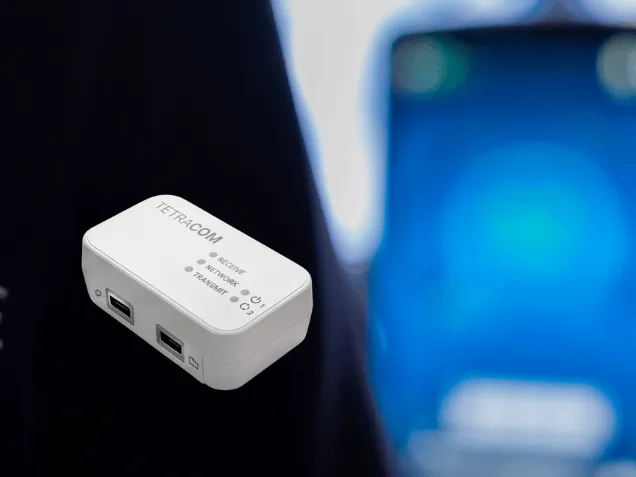
TetraCom helps support this workflow by enabling automated transmission of quantitative neuromuscular monitoring data directly into the EHR, reducing reliance on manual charting and supporting more consistent documentation practices.
Potential benefits of automated documentation workflows include:
- Improved consistency of TOF documentation
- Reduced manual charting burden
- Support for audit readiness and accreditation initiatives [4]
- Better alignment with perioperative quality and compliance programs
In one pediatric quality-improvement study, adherence to appropriate intraoperative antibiotic redosing increased from 4.3% to 73% after implementation of electronic tracking and alerts together with physical and educational interventions. [5] Although this study did not evaluate neuromuscular monitoring, it illustrates how EHR-enabled clinical decision support can contribute to more consistent perioperative workflows.
TetraCom vs. TwitchView EMR Integration — Key Differences
Blink Anesthesia and TwitchView® support EMR integration with Epic, Cerner, and Innovian with an open interface commitment. [6] However, TetraCom was designed around universal HL7 messaging and cloud-based infrastructure to support scalability across evolving IT environments.
Potential advantages of the TetraCom approach include:
- Universal HL7 compatibility rather than proprietary connectors
- Cloud-based architecture designed for future analytics capabilities
- Simplified scalability across multiple facilities
- Reduced integration complexity during EHR migrations
This may be particularly valuable for health systems operating multiple EHR environments or planning future platform transitions.
As perioperative quality standards continue to evolve, automated neuromuscular documentation is becoming increasingly important for anesthesia departments seeking standardized workflows, improved compliance, and streamlined clinical documentation.
The combination of TetraGraph and TetraCom helps transform neuromuscular monitoring from a manually charted process into an integrated digital workflow designed for modern perioperative care.
See how EMG-based quantitative TOF monitoring can support confident neuromuscular block management from induction through recovery. Request demo
See how EMR integration compares between TetraGraph and TwitchView. Explore guide now
Please note: This page is intended for healthcare professionals. It is primarily tailored to the U.S. market, but may also be relevant for other regions.
- Goriacko P, Chao J, Fassbender P, et al. Optimizing neuromuscular block monitoring and reversal: a large-scale quality improvement initiative in a diverse healthcare setting. J Clin Anesth. 2025;101:111709. doi:10.1016/j.jclinane.2024.111709. PMID: 39671754; PMCID: PMC11750612.
- Senzime. Senzime launches TetraCom™, the first dedicated connectivity platform for quantitative neuromuscular monitoring. Company press release. February 19, 2026.
- American Society of Anesthesiologists. Practice Guidelines for Monitoring and Antagonism of Neuromuscular Blockade. Anesthesiology. 2023.
- Tewfik G, Minzter B, Chiao F, et al. Narrative review of electronic health record systems in anesthesia: benefits, risks, and medico-legal considerations in the United States of America. J Med Syst. 2025;49(1):87. doi:10.1007/s10916-025-02221-z. PMID: 40545522; PMCID: PMC12183129.
- Colletti AA, Wang E, Marquez JL, et al. A multifaceted quality improvement project improves intraoperative redosing of surgical antimicrobial prophylaxis during pediatric surgery. Paediatr Anaesth. 2019;29(7):705–711. doi:10.1111/pan.13651.
- Blink Anesthesia – TwitchView2 Product Page. Accessed May 2026.